
AI is no longer limited to discussions among tech companies or researchers. It has now become a very commonly discussed topic in every household because of the vast usage of AI in every aspect of life. AI has been shaping the way people shop online these days, communicate with businesses, receive medical care, and also handle daily tasks. The AI systems have now quietly been working behind many digital services.
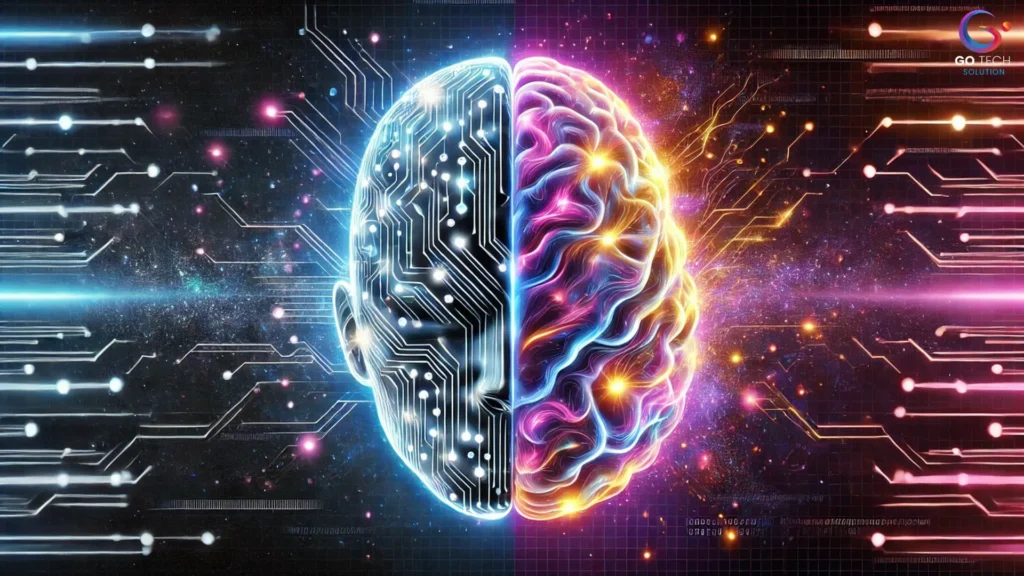
Over the past few years and decades, the usage of AI has rapidly changed and expanded far beyond its current capabilities and applications. Experts in this field believe that the future of artificial intelligence will reinvent the ways industries operate, how cities function, and also change the ways people interact with technology in everyday life. The enterprises that understand these shifts at the earliest will be better prepared to innovate and adapt.
Mentioned below are a few important trends that will shape the future of artificial intelligence in the next 10 years to come.
1. Artificial Intelligence Will Become a Core Business Technology
Several companies have been making use of AI for certain tasks, such as customer support automation or data analysis. However, in the upcoming years, AI will be more widely used and also become part of the business infrastructure.
Companies will increasingly rely on AI for:
- Customer behaviour insights that help personalise products and services
- Predictive analytics to forecast demand and market trends
- Decision support systems that assist managers with complex data analysis
- Process automation to reduce repetitive manual work
With the introduction of numerous cloud platforms, AI has become more accessible than ever. The enterprises do not need to have huge internal infrastructure to make use of advanced machine learning models. With such growing accessibility, there will be a strong influence on the future of artificial intelligence across both large and small enterprises.
2. Smarter Automation Will Transform Industries
The process of automation has existed for decades, but AI is now making the use of automation more advanced and flexible. Instead of just following fixed instructions, AI systems can now learn and adjust their behaviour according to the data over time.
Numerous industries are already seeing these improvements:
- Logistics: Warehouses that have automation functions enhance the speed and accuracy.
- Transportation: Developing autonomous vehicles and smart navigation systems.
- Retail: An AI-based inventory management system helps in predicting product demand.
- Manufacturing: Making use of intelligent robots that adapt to changing production needs.
Such innovations are expected to grow significantly over the years to come. As automation functions have become more intelligent, the future of artificial intelligence will include systems that can handle complicated operations with minimum human supervision.
3. Healthcare Will Experience Major AI-Driven Advancements
Healthcare is a sector that has become one of the most promising areas for AI development. The medical professionals generally have a huge amount of data to refer to, which includes the patient’s records, imaging reports and laboratory results. AI can help in examining all this information much faster than traditional methods.
In the next decade, AI is expected to support healthcare through:
- Early disease detection using advanced medical imaging analysis
- Faster drug discovery by analysing chemical and biological patterns
- Remote patient monitoring through AI-powered health devices
- Personalized treatment plans based on patient history and genetic data
With such developments in the field of AI, it will help in enhancing both the speed and accuracy of medical decision-making. As the research continues, the future of artificial intelligence in healthcare may importantly enhance the patient outcomes and also the accessibility to medical expertise.
4. Human and AI Collaboration Will Define the Workplace
One of the most common concerns after the introduction of AI has been whether artificial intelligence will replace human jobs. While making use of automation will change certain roles, there are many experts who believe that in the future, the companies will focus on having a collaboration between intelligent systems and humans.
AI systems have the capability to process huge datasets and recognise patterns, while human brains are better at creative thinking, emotional understanding and complicated reasoning.
Examples of human-AI collaboration include:
- Marketing teams taking help of AI insights to design better campaigns
- Customer support teams assisted by intelligent chat systems
- Researchers using AI to analyze large scientific datasets
- Financial analysts reviewing AI-generated market predictions
Rather than replacing human workers entirely, the future of artificial intelligence will help improve productivity by combining human expertise with machine efficiency.
5. Generative AI Will Expand Across Creative and Technical Fields
With the introduction of generative AI tools in recent years, these tools have already displayed their ability to produce images, written content, software codes and music. Over the next 10 years, all of these technologies are expected to become more accurate and widely adopted.
Generative AI could influence many industries, including:
- Content creation and marketing
- Software development and coding assistance
- Education and personalized learning materials
- Graphic design and media production
With the help of these tools, the professionals in these fields can complete their tasks faster and also explore the new creative possibilities. As the capabilities of these tools improve, the generative models will become a major part of the future of artificial intelligence across both creative and technical industries.
6. Responsible AI Development Will Become Essential
As the AI grows to become more powerful, the private organisations and the government are now focusing more on how it is developed and used. All the legal concerns, such as privacy protection, algorithmic bias and transparency, are now becoming the key discussion points globally.
Over the next decade, we are likely to see:
- Stronger AI regulations from governments and international bodies
- Explainable AI technologies that help users understand how systems make decisions
- Greater transparency requirements for automated decision systems
- Improved data privacy protections for individuals
With the development of such government efforts, it will help make sure that the future of artificial intelligence remains in accordance with the ethical standards and gains public trust.
7. Smart Cities Will Use AI to Improve Urban Life
In the years to come, AI will be widely used across the nation to manage modern urban cities. With the growing population in the urban cities, the state and the central government need more effective and efficient ways to handle infrastructure and resources.
AI-driven technologies can support cities in several ways:
- Traffic optimization systems that reduce congestion
- Waste management systems that improve efficiency
- Public safety monitoring through real-time data analysis
- Smart energy grids that balance electricity demand
The above-mentioned applications of AI show how the future of artificial intelligence will widen beyond business usage and will be used in everyday public infrastructure.
8. Advancements in AI Hardware Will Drive Innovation
The artificial intelligence is highly dependent on computing power. As the demand for AI applications grows, the technology companies are now putting their money into specialised hardware that is designed specifically for machine learning tasks.
Future advancements may include:
- Energy-efficient computing systems for large-scale AI models
- Edge computing devices that run AI locally on phones, sensors, and machines
- AI-optimised processors capable of faster data processing
- Improved data storage systems designed for large training datasets
These enhancements in the hardware will make the AI systems faster, more accessible, and more scalable. They will also help in accelerating the overall future of artificial intelligence across multiple industries.
Conclusion
The usage of AI is seen entering a period of robust and rapid advancement that will influence almost all aspects of modern life. The enterprises will heavily depend on AI for smarter decision-making, various industries will be seen adapting to more intelligent automation, and the cities will also start making use of AI-powered infrastructure to help enhance proficiency. At the same time, there will be a need for thoughtful regulation and responsible development of AI usage to benefit society as a whole.
The future of artificial intelligence does not solely rely on technological progress, but it also depends on how organisations choose to apply it. The businesses that start putting their money into AI-driven innovation will be seen in leading positions tomorrow.
If you or your company is looking for a chance to explore the advanced digital technologies and AI-powered solutions, then GoTech Solutions is the best choice for expert guidance to help businesses adapt to the changing technology landscape. Visit the official website of GoTech Solutions to discover how their innovative solutions can support your digital transformation journey.