
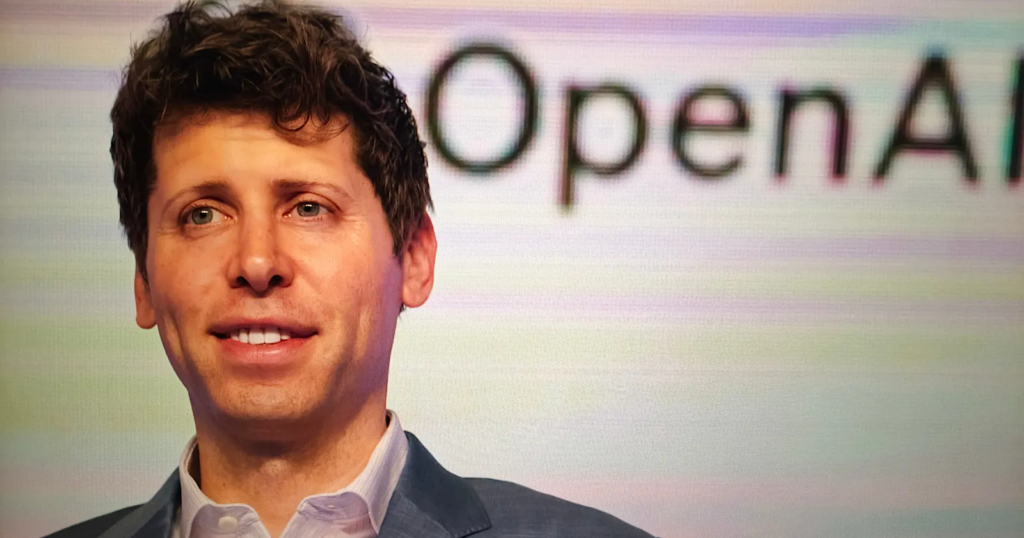
OpenAI CEO Sam Altman admitted during a rare public moment that his company made mistakes that resulted in the writing quality of GPT-5.2. The development team focused too much on building technical skills because they lost their ability to produce clear and readable text. His developer town hall presentation demonstrated two things about user experience problems, which he acknowledged, and the ongoing struggle between developing specialized AI systems and creating models that communicate effectively across different contexts.
This article examines what Altman said, why the issue matters for users and enterprises that rely on generative output, and how this kind of trade-off highlights broader trends in AI research and product strategy.
OpenAI’s Statement on GPT-5.2 Writing Quality
At a recent OpenAI town hall, developers and users raised concerns that GPT-5.2’s output felt less natural to read than that of GPT-4.5, particularly in tasks involving narrative flow, clarity, and conversational tone. Sam Altman’s response was unusually blunt for a tech leader:
“I think we just screwed that up,” Altman said, referring explicitly to the writing quality in GPT-5.2. “We will make future versions of GPT-5.x hopefully much better at writing than 4.5 was.”
This level of candor is rare in a product space where companies typically emphasize improvements and de-emphasize regression or user frustration. It suggests that OpenAI recognizes not just the complaints, but the practical impact that a perceived decline in writing quality can have on workflows and outcomes.
Where the Priorities Shifted in GPT-5.2 Development
According to Altman, the trade-off in GPT-5.2 was a deliberate decision:
“We did decide… to put most of our effort in 5.2 into making it super good at intelligence, reasoning, coding, engineering, that kind of thing. And we have limited bandwidth here, and sometimes we focus on one thing and neglect another.”
OpenAI made a resource allocation decision to give priority to testing analytical and logical functions and technical functions while ignoring stylistic fluency. The developers of GPT-5.2 designed the system to focus on advanced reasoning abilities and developer-oriented features which included spreadsheet construction and code generation and automated complex tasks.
This reflects a broader tension in AI research:
- Technical ability (problem solving, reasoning, code generation) is measurable with structured benchmarks.
- Writing quality (clarity, style, narrative flow) is subjective, harder to benchmark, and often valued most in real-world human workflows.
The choice to emphasize the former temporarily means users who rely on the model for narrative tasks — content creation, editing, or client communication — may perceive a regression. This particularly affects professionals in marketing, publishing, customer service, and other fields that depend on fluent text generation.
Why Writing Quality Still Matters
It’s easy to view writing quality as cosmetic, especially when compared with reasoning or coding ability. But that’s a narrow view of what writing enables in the real world:
- Clarity and comprehension: Business proposals, executive summaries, legal language, and policy documents demand precision and readability. If output feels “hard to read” or stilted, it increases editing overhead and risk of misunderstanding.
- Brand voice and tone: Many enterprises use AI to scale content while preserving brand consistency. Regression in style undermines standardization and may require extra editorial resources.
- User trust: Fluency drives user confidence in output. When responses feel mechanical or inconsistent with expectations from prior versions, users may question the reliability or relevance of results.
For many teams integrating AI into workflows, the guinea pig effect — where a tool works brilliantly in technical tests but poorly in practical usage — can be frustrating and costly.
What Users Are Reporting
Independent user feedback amplifies Altman’s acknowledgment. Across social platforms and AI communities, practitioners describe GPT-5.2 output as:
- Overly mechanical or terse
- Less engaging than prior iterations
- Stylistically inconsistent with expectations informed by GPT-4.5 or GPT-4o experiences
One frequent criticism is that while the model exhibits strong calculative intelligence — solving coded tasks, logical puzzles, and analytical queries — its narrative coherence lags, particularly in open-ended creative or conversational contexts.
These perceptions matter because user experience drives adoption and trust. A model that produces technically accurate but poorly communicated text can undermine that trust, especially in professional settings where tone and clarity are essential.
A Strategic Trade-Off or a Misstep?
It’s tempting to label this solely as a mistake. But Altman’s framing suggests a strategic choice with consequences:
“Sometimes we focus on one thing and neglect another.”
AI development teams face a constant allocation challenge: how to divide finite compute, data curation, human feedback, and engineering attention. When resources are limited — and they always are — prioritization becomes inevitable. In this case:
- Technical proficiency and task-oriented strength took precedence.
- General expressive capacity, which is harder to quantify, received less emphasis.
From a product strategy perspective, this isn’t unusual. Many complex tech systems optimize for measurable performance gains first, then tune nuance and user experience later.
But in AI, where every release is user-facing and highly public, such trade-offs are instantly visible, and user responses can be sharply negative.
The Broader AI Development Context
This incident highlights a larger phenomenon in the AI landscape: the tension between narrow optimizations and holistic capability. Two tendencies are emerging across the field:
- Benchmark-Driven Development:
Models are often trained to optimize for specific tasks (reasoning, math, code), which are easier to validate and benchmark. - Holistic User Experience:
Fluency in writing, tone adaptation, creativity, and engagement are harder to quantify. But they are core to how humans actually use these tools.
Altman’s comment suggests OpenAI recognizes this gap and intends to reconcile it in future releases. This fits with what some in the research community call general capability alignment — where a model must perform well across technical tasks and human-centered communication.
Competitor models like Anthropic’s Claude, for example, aim to balance reasoning strength with response quality, explicitly testing for both in benchmarks. Industry comparisons suggest that models excelling only in technical metrics may not always rank highest in user satisfaction.
Real-World Implications for Organizations
Organizations that have integrated GPT models into workflows should take Altman’s statement seriously but pragmatically.
1. Re-evaluate Model Selection for Tasks
Not all versions of GPT are equally suited to all tasks. For creative writing, client communication, or narrative generation, GPT-4.5 may still outperform GPT-5.2 in user satisfaction, even if the latter is technically superior.
2. Rethink Prompt Design and Fallbacks
When output feels unwieldy or stilted, companies might need to adjust prompts or implement fallback models for particular use cases. Treating a model update as a dependency change — much like a software library or API change — is critical for robust operations.
3. User Expectations and Training
End users should be informed about model strengths and limitations. A model that is excellent for coding may not be the best choice for drafting external communication without editing.
4. Feedback Loops with Providers
User feedback is central to iterative improvements. Altman’s acknowledgment shows OpenAI is listening; structured feedback channels can accelerate corrections and better align models with real workflows.
FAQs: Writing Quality in GPT Models
Why did OpenAI say GPT-5.2 has poorer writing quality?
OpenAI shifted most engineering focus in GPT-5.2 to intelligence, reasoning, and coding capabilities, which temporarily reduced emphasis on writing fluency compared to GPT-4.5.
Does this mean GPT-5.2 is worse overall?
Not necessarily. It excels at technical and analytical tasks but may feel less readable or stylistically engaging, reflecting prioritization rather than a regression in all areas.
Will future versions fix the writing issues?
Altman has stated that OpenAI aims to make future GPT-5.x models “much better at writing than 4.5 was,” indicating intentional improvements are planned.
Should users avoid GPT-5.2?
That depends on the use case. For code generation, logic tasks, or complex problem solving, GPT-5.2 is likely beneficial. For narrative or stylistic content, earlier versions like GPT-4.5 may still perform better.
How should organizations respond to model regressions?
Treat model versions as dependencies: test workflows when updates arrive, adjust prompts, and consider hybrid strategies that use different models for different tasks.
Conclusion: A Necessary Trade-Off and a Path Forward
OpenAI’s leadership showed unusual honesty about the writing problems in GPT-5.2, which they attributed to their intentional decision to concentrate on developing technical skills. AI systems face their main problem when they need to develop both specialized abilities and basic communication skills. Organizations and users should maintain their use of the model because they need to identify its advantages and reduce its drawbacks while developing future improvements. Altman’s admission shows that AI development has reached a more advanced stage, which values user experience and communication skills as essential elements for success. The upcoming stage of generative AI adoption will depend on how OpenAI and its competitors handle the two requirements.
As a trusted digital marketing agency in India, we create impactful strategies that strengthen your brand and connect you with the right audience. Contact us today to get expert digital marketing services in India designed for long-term success.